 Grant Novota
YAC-1 Satelite Constellation
Assembly, Integration & Test
I led the test engineering effort that took a brand-new satellite production line from an empty room to eight spacecraft on orbit.
The Mission
A daily picture of the whole planet.
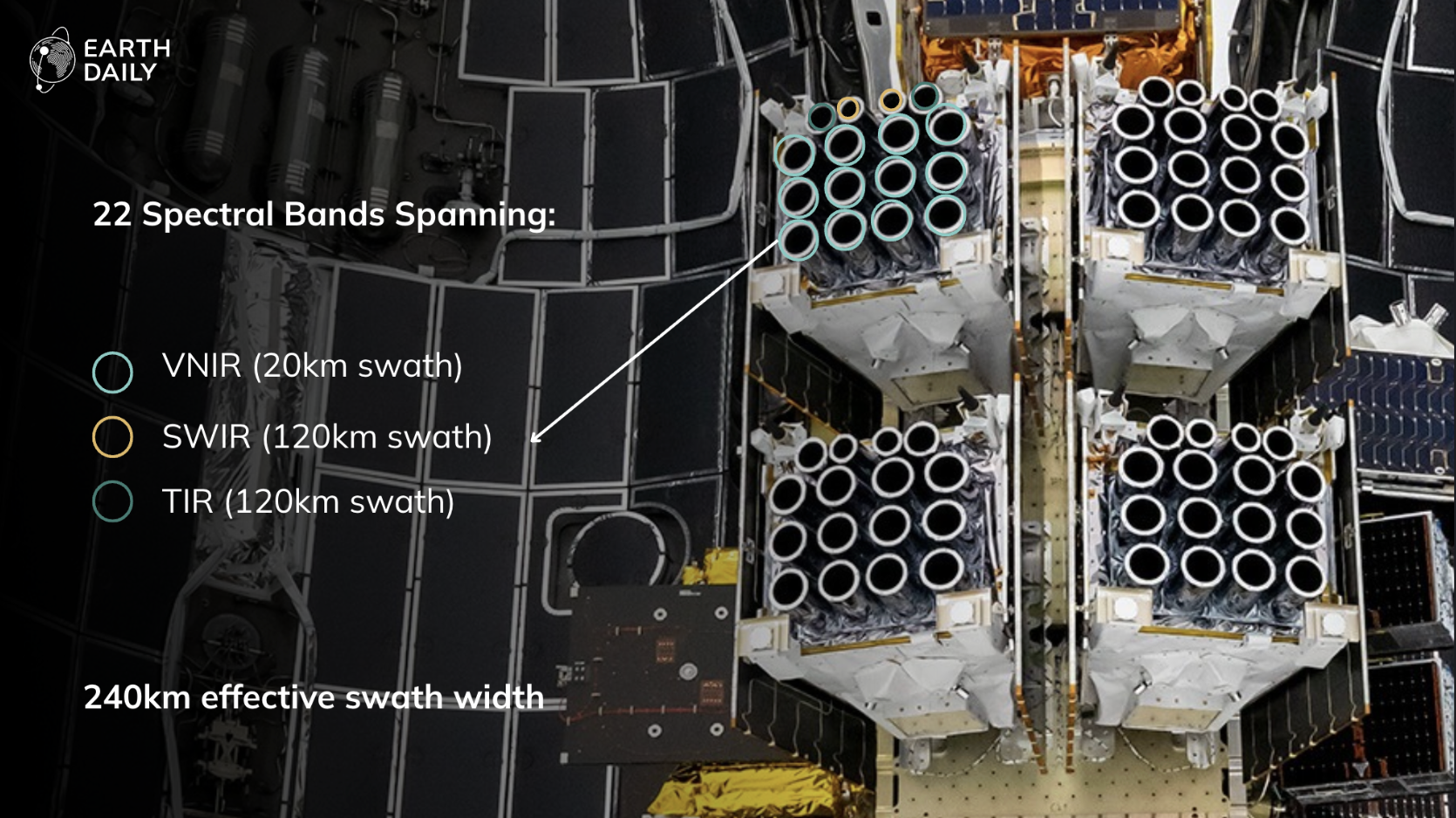
YAC-1 — the EarthDaily Constellation — is a fleet of ten satellites designed to image nearly all of Earth's landmasses every day across visible, near-infrared, short-wave infrared, and thermal bands. Each spacecraft carries a complex optical payload of 16 imaging systems across 22 spectral bands, managed by a distributed payload electronics unit.
The satellites are built on Longbow, Loft's version of the Airbus OneWeb Arrow platform, paired with Loft's payload Hub. They fly in a coordinated 585 km sun-synchronous orbit, imaging the same locations at roughly the same local time from nadir for consistent, calibrated measurement of change.
All ten spacecraft have been built. Eight — YAM-10 through YAM-17 — are on orbit; the final two, YAM-18 and YAM-19, are fully assembled and tested and are simply waiting on a rocket — complete flight hardware manifested for a future launch.
My Role
From an empty facility to on-orbit commissioning.
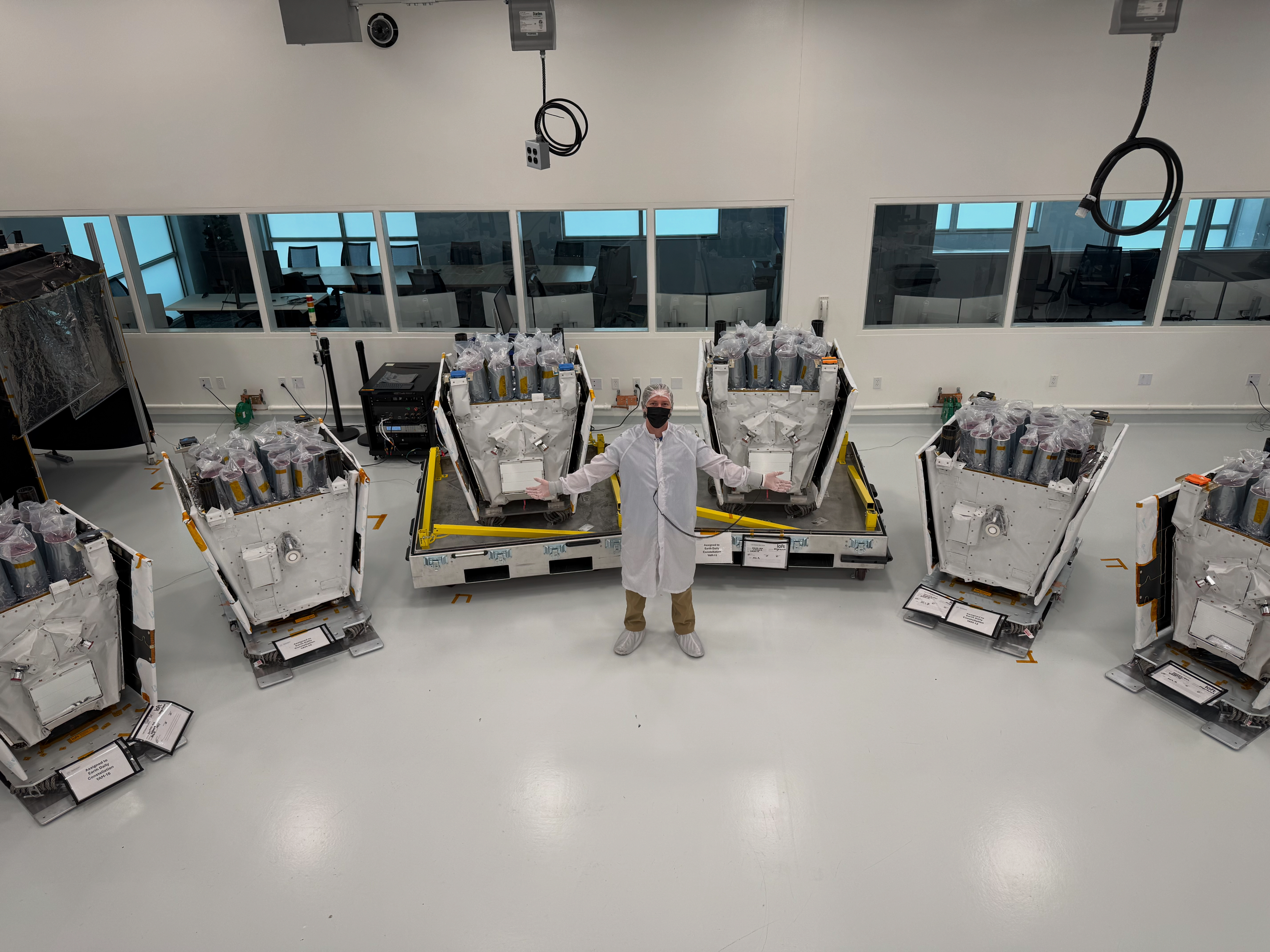
As AIT lead I was accountable for the ground infrastructure, the test content, and the daily execution — end to end, from the first payload power-on through launch-site integration.
Stood up the I&T Center
Contributed from the construction of Loft's new Integration & Test facility, shaping the floor layout, test bays, and ground-support footprint for constellation-scale production.
Helped launch Longbow production
Helped get the Longbow satellite line running and co-developed the standard AIT flow now used across every Longbow vehicle.
Designed, built & tested the SCOEs and tilt fixture
Owned the Special Checkout Equipment (SCOE) racks and the solar-array tilt fixture — design, procurement, assembly, validation, and sustaining support.
Led initial YAC-1 payload testing
Ran early EarthDaily payload testing, including an additional SCOE design tailored to payload receive and checkout.
Led daily operations, planning & test authoring
Directed day-to-day integration and scheduling, wrote all bus and payload test scripts, and chaired Test Readiness Reviews.
Parallelized the line and supported launch integrations
Drove process improvements to run six satellites through the AIT flow simultaneously — and integrate that same batch six-up at the launch site — while supporting the YAM-10 and YAM-17 launch integrations.
Planning & Technical Approach
One standard flow, engineered to repeat.
The core planning philosophy was to build a single, standardized AIT flow that every Longbow vehicle could follow — minimizing vehicle-level rework, front-loading testing to the earliest possible level of assembly, and reserving custom effort only for what a specific mission genuinely required. I co-developed this flow and authored the test content that runs inside it.
Microservices test suite
Designed the bus functional test suite around a microservices architecture for telemetry/telecommand and procedure execution.
Payload functional set
Authored payload aliveness, comms, PPS/time-sync, image-capture, and PEU-to-X-band data-transfer tests.
Day-in-the-Life
Built and standardized the DITL campaign — and the customer test-report format — across YAM-10 through YAM-17.
Reviews & readiness
Led TRRs and integration-readiness gates, tying test content to the master traveler and schedule.
Ground Support Engineering
The rack that keeps a satellite alive on the ground.
A satellite on the bench has no sun and no radio link, so a SCOE (Special Checkout Equipment rack) becomes its life support — supplying conditioned power in place of the solar array and an Ethernet command path in place of the RF link. I designed, built, validated, and maintained these racks around common commercial building blocks so one design could scale across the whole fleet and any engineer could walk up to any rack and operate it.
- Cockpit Mission Control
- Observability TM / Metrics
- Fleet Config Deploy
- Programmable PSU solar/battery sim
- Compute Cockpit + procedures
- Web relay remote battery-sep
- Managed Ethernet switch
- OSHA E-stop & safing
- Longbow Bus Onboard Computer
- Loft Hub
- EarthDaily Payload · Imagers
Standardizing the design let the same rack deploy a dozen-plus times across the fleet and travel wherever the hardware went — Loft's Colorado I&T Center, the Airbus OneWeb line in Florida, Toulouse, the launch site at Vandenberg, and a sovereign satellite-manufacturing facility in the UAE.
The tilt fixture
Beyond the electrical racks, I designed, built, and tested the powered tilt fixture used to rotate the spacecraft for solar-array handling — including a custom TM/TC server and GUI to drive its industrial actuator over a CANbus network, with range-checking, load and over-current monitoring, and a manual override for safety.
Design reviews
Carried the SCOE and fixture designs through DCR / PDR / CDR process.
Harnessing
Designed released, revision-controlled harness kits and a modular adapter-plus-commodity-cable strategy.
Automation
Built infrastructure to keep every rack configured, updated, and remotely operable in sync.
Scaling to a Constellation
Ten satellites can't move one at a time.
Parallelization had to start long before the pad. I drove the process improvements — parallel procedures, replicated SCOE ground equipment, and remote multi-vehicle test execution — that let six spacecraft run through the AIT flow at the same time, moving through integration, functional testing, and environmental campaigns concurrently on the I&T Center floor rather than one after another.
That same six-up model then carried into the launch campaign, where the batch was integrated together at the launch site instead of serially — keeping the constellation on cadence from the production floor all the way to the rocket.
Challenges & Solutions
Where the interesting problems lived.
Outcomes & Lessons Learned
What shipped, and what stuck.
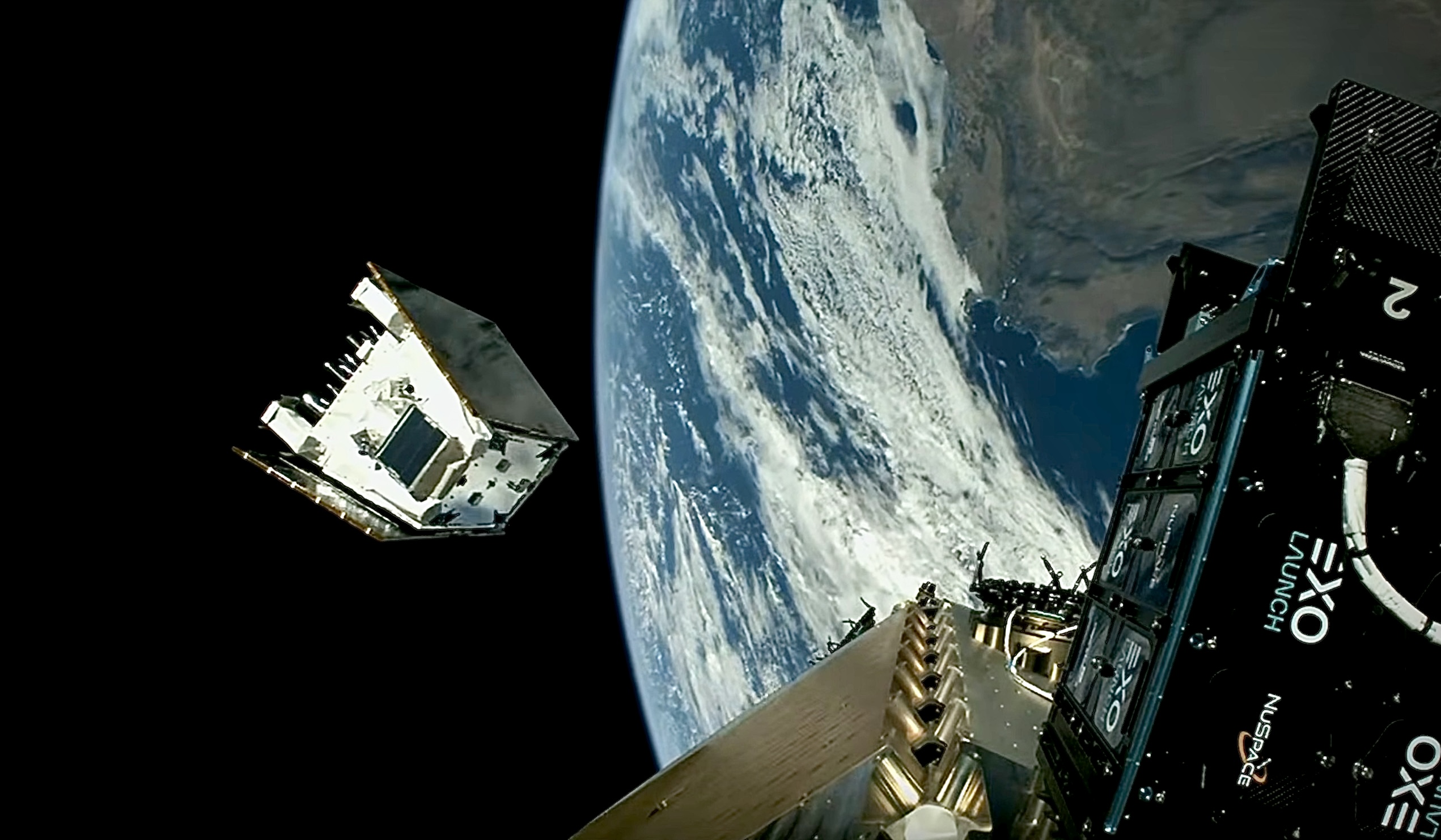
Eight YAC-1 spacecraft — YAM-10 through YAM-17 — were integrated, tested, and launched, and the final two, YAM-18 and YAM-19, are built and tested and standing by for a launch slot. The ground infrastructure, test content, and flow I built are now reused across Loft's broader Longbow programs. The lasting value wasn't any single vehicle; it was a repeatable system.
Standardize first, customize last
The cheapest, most reliable ground system is the one built from proven common blocks — custom hardware has to earn its place.
Design test infrastructure as a product
Racks, harnesses, and scripts that anyone can operate and update beat brilliant one-offs only their author understands.
Test as early and as low as possible
Front-loading verification to the unit and sub-assembly level keeps issues cheap and protects the production cadence.
Constellations are a throughput problem
Parallelizing operations and replicating equipment matters as much as any single test — the line, not the vehicle, is the deliverable.